
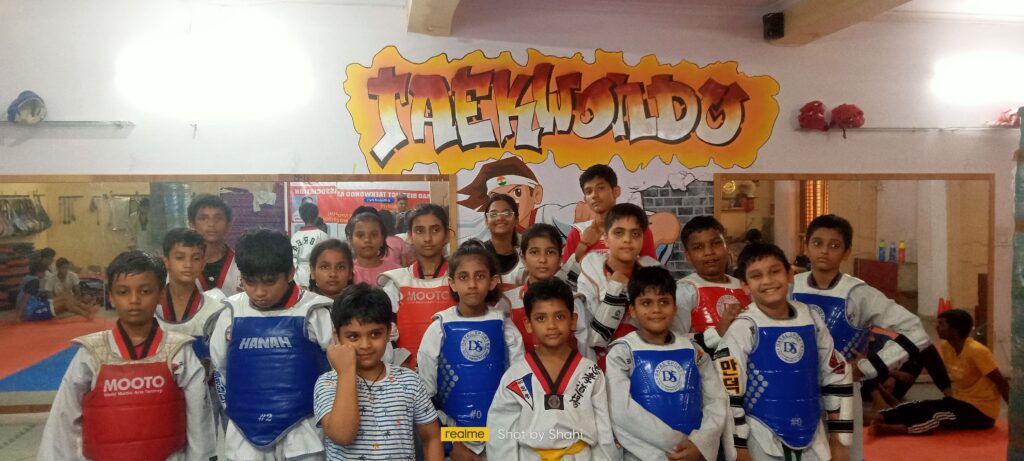
Introduction: Why Taekwondo Is More Than Just Kicks and Punches
Have you ever seen someone perform a perfect spinning kick or confidently step into a ring and wonder, “How do they move like that?” At first glance, Taekwondo can look like a high-energy sport filled with dramatic movements and loud shouts—but there’s much more beneath the surface. Taekwondo isn’t just about physical power. It’s a journey of mental focus, emotional control, and character-building that can last a lifetime. Whether you’re curious about martial arts discipline, seeking self-defense skills, or looking for a meaningful activity for your child, understanding what Taekwondo truly represents is the first step to appreciating its depth.
With a history rooted in ancient Korean traditions and a philosophy that emphasizes respect, perseverance, and integrity, Taekwondo offers more than fitness—it offers a way of life. In this blog, we’ll explore how this global martial art came to be, what principles it’s built on, and why it’s one of the most respected systems of personal development around the world. If you’ve ever wondered what makes Taekwondo more than just a sport, you’re in the right place.
From Ancient Warriors to Olympic Glory: A Brief History of Taekwondo

To understand Taekwondo, you have to appreciate where it came from—because its history is not just about combat, but cultural identity and evolution. While modern Taekwondo was officially established in the 1950s, its foundational techniques date back over 2,000 years to ancient Korean martial arts such as Taekkyeon and Hwa Rang Do. These were practiced by the Hwarang, an elite warrior class that trained not only in battle but also in values like loyalty, honor, and righteousness.
Following Japanese occupation in the early 20th century, Korean martial artists sought to reclaim their identity by reviving and systematizing traditional fighting styles. By 1955, several martial arts schools—or kwans—merged under the guidance of military and civilian leaders to create what we now call Taekwondo, meaning “the way of the foot and fist.”
Its explosive kicks and powerful techniques gained international attention, and by the 1980s, Taekwondo had become a global phenomenon. In 2000, it debuted as an official Olympic sport—a testament to its technical excellence and cultural impact. But even as Taekwondo grew in competition, it never lost its roots. Every movement still echoes centuries of tradition, and every belt represents not just skill, but growth in character. This blend of ancient wisdom and modern sport is what gives Taekwondo its unique identity.
Philosophy in Motion: The Core Values That Make Taekwondo Transformational
Taekwondo is more than mastering kicks or earning belts—it’s about developing who you are. At its heart lies a philosophy that emphasizes personal growth through discipline, humility, and respect. These values aren’t just spoken about in class—they’re woven into every part of training, from the way students bow before entering the dojang to how they treat sparring partners with dignity.
The five core tenets of Taekwondo guide every practitioner’s journey:
- Courtesy (Ye Ui): Respect for instructors, fellow students, and even opponents. Courtesy reminds us that strength must be paired with kindness.
- Integrity (Yom Chi): Doing what’s right, especially when no one is watching. It’s the quiet voice of accountability that grows stronger with each training session.
- Perseverance (In Nae): The ability to keep going—through tough drills, failed belt tests, and life’s everyday struggles.
- Self-Control (Guk Gi): Managing your emotions, reactions, and impulses. A true martial artist knows that the greatest battles are often internal.
- Indomitable Spirit (Baekjul Boolgool): Standing tall even when odds are against you. It’s about grit and refusing to back down.
These principles are why parents often enroll children in Taekwondo—not just to defend themselves, but to become more focused, confident, and respectful. And adults find value too: in a world filled with stress and distraction, Taekwondo offers a grounding force, helping people reconnect with discipline and purpose.
So, while it may look like students are just practicing forms or kicks, what’s really happening is inner development—philosophy in motion. That’s what makes Taekwondo so powerful, both on and off the mat.
Final Thoughts: Start Where You Are, Not Where You Think You Should Be
If there’s one thing Taekwondo teaches above all, it’s this: you don’t need to be perfect to begin—you just need to start. Every black belt was once a white belt. Every confident fighter once struggled with their first stance. The beauty of this martial art is that it meets you where you are and helps you grow—physically, mentally, and emotionally.
Whether you’re considering enrolling in a local class, introducing your child to martial arts, or simply exploring something new for your personal growth, Taekwondo has something to offer. It’s not about becoming a fighter. It’s about becoming more disciplined, focused, and resilient in everyday life.
So why not take that first step?
Find a nearby dojang, step onto the mat, and bow in.
You might just walk out feeling stronger—in more ways than one.
-Pushkar Shahi